How to Read a Customized Furniture Spec Sheet Before You Sign an Order
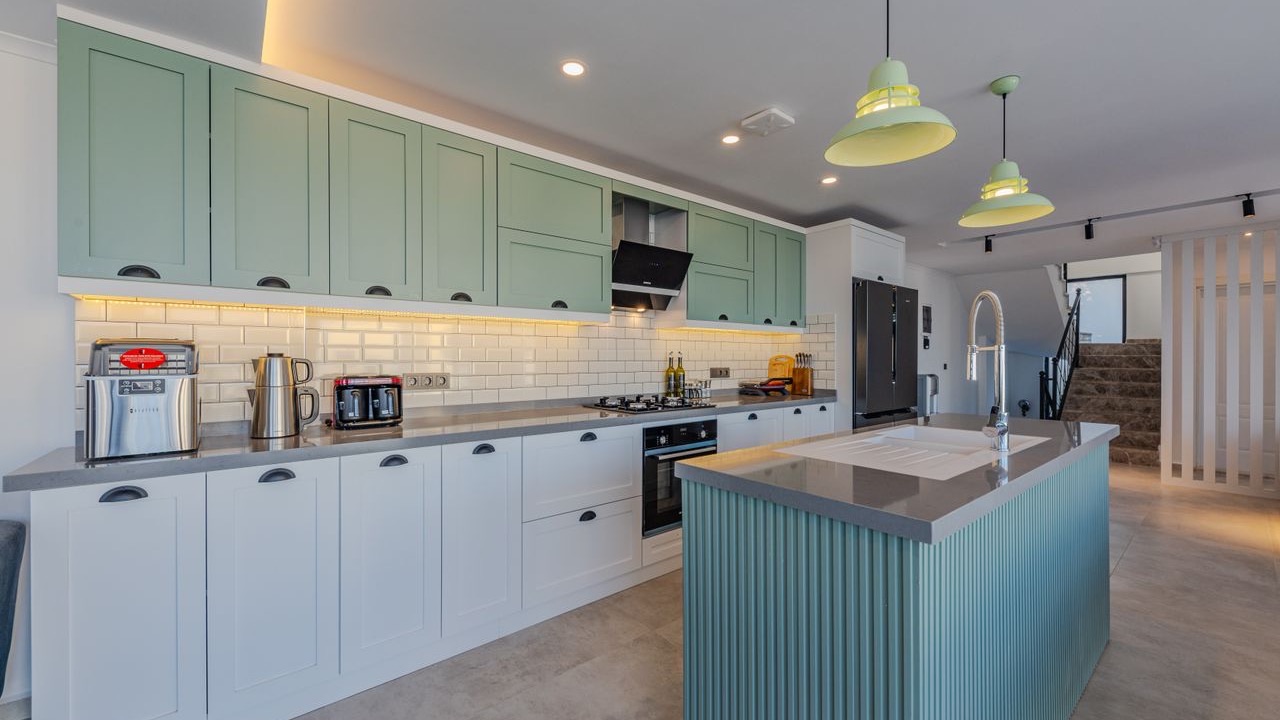
Signing off on a customized furniture order without understanding the spec sheet is one of the more common ways buyers end up with something different from what they expected. The spec sheet is the contract — it defines exactly what will be made, and when there’s a discrepancy between expectation and delivery, the spec sheet is what the manufacturer refers back to. Understanding it before the order is placed is significantly more useful than trying to understand it after something goes wrong.
The challenge is that spec sheets for customized furniture are dense, use technical terminology inconsistently across manufacturers, and often contain important details alongside a lot of information that doesn’t affect the outcome. Knowing which items deserve close attention and what questions to ask about them makes the review manageable.
Board specification and certification
The core material in most customized furniture — the panels used for cabinet carcasses, wardrobe bodies, and drawer boxes — is specified as a board type with an associated emission standard. This is one of the most important items on a spec sheet and one of the most easily glossed over.
Board types include MDF (medium-density fiberboard), particleboard (chipboard), plywood, and solid wood. Each has different structural properties, density, and moisture resistance. MDF machines cleanly and holds edge profiles well but is heavier and less moisture-resistant than plywood. Particleboard is the most common board in volume furniture production and is adequate for most applications when properly specified. Plywood is stronger and more moisture-resistant and is typically used for structural elements and wet-area applications.
The emission standard — how much formaldehyde the board off-gasses — is specified as E2, E1, or E0 (or equivalent CARB ratings for North American markets). E2 is the lowest standard and is not compliant with most developed-market regulations for residential use. E1 is the standard for most European markets. E0 is the most stringent and is appropriate for buyers who want the lowest emission specification. When the spec sheet lists “E1 board,” confirm whether this means the base board meets E1 or whether the assembled product (including glues and edge banding) has been tested to E1 as a finished product — these are different things.
Door and surface finish specification
The surface finish on cabinet and wardrobe doors is specified separately from the board substrate, and it’s where the visual character of the furniture is determined. Common finish types include foil wrapping (a PVC or melamine film applied to MDF), lacquer (paint applied to MDF or solid wood), veneer (a thin wood layer bonded to the substrate), and laminate (a resin-impregnated paper bonded under heat and pressure).
Each finish has different durability, maintenance requirements, and aesthetic properties. Lacquer provides the cleanest, most painterly look but is more susceptible to chipping at edges than laminate. Veneer looks closest to solid wood and varies in natural grain, which means no two doors are identical — buyers who want complete uniformity across a large run should confirm whether the veneer is book-matched or selected for consistency. Laminate is the most durable and the easiest to clean, making it practical for kitchen doors that see regular wiping.
The spec sheet should identify the finish type, the specific product or reference color, and the texture (matte, satin, or high gloss). If the spec sheet says “lacquer finish, white,” confirm whether this means a factory-applied lacquer in a standard white or a custom-matched color, and what the tolerance on the color match is. For large orders, requesting a physical color sample before production sign-off is standard practice for a reason.
Hardware specification
Hardware — hinges, drawer slides, handles — affects both function and longevity more than most buyers realize. The spec sheet should identify the hardware brand and model, not just the hardware type. “Soft-close hinges” could mean anything from entry-level hardware that’s barely soft-close to Blum or Grass components that will function smoothly after 100,000 cycles.
For drawer slides specifically, the spec should indicate whether the system is full-extension (drawer opens fully to access the back of the cabinet) or partial-extension, and whether the soft-close mechanism is integrated into the slide or added as a separate component. Integrated systems tend to be more reliable than add-on soft-close mechanisms.
If the spec sheet lists hardware by generic description rather than brand and model, ask for the brand. A manufacturer sourcing from piano furniture and similar quality-positioned companies will use hardware from recognized brands — Blum, Grass, Häfele, Hettich — and should have no difficulty providing the specification.
Dimension tolerances
Customized furniture is manufactured to specified dimensions, but no production process is perfectly precise. The spec sheet should indicate the dimensional tolerance — how far from the specified dimension an actual component can be and still be accepted.
Standard tolerances for high-quality customized furniture production are ±1mm for component dimensions. Tolerances looser than ±2mm can cause visible gaps at joints and inconsistencies at wall interfaces that are hard to fix at installation. If the spec sheet doesn’t list tolerances, ask. A manufacturer without a clear answer doesn’t have a quality control standard for dimensions.
Edge banding specification
Edge banding covers the exposed raw edges of board panels and affects both aesthetics and moisture resistance. The spec should identify the edge banding material (PVC, ABS, or veneer matching the face), the thickness in millimeters, and the application method.
Thin edge banding (0.4mm or less) is standard for economy furniture. Better specifications use 1mm or 2mm edge banding, which is more resistant to impact and peeling, and is more visually refined because it can be profiled at the edges rather than just butted flush. For kitchen furniture that sees daily wiping with damp cloths, thicker edge banding with proper adhesive application is a durability difference, not just an aesthetic one.
What a thorough review actually takes
Reading a spec sheet properly for a whole-house order takes time. The temptation is to review it quickly and assume that a reputable manufacturer’s standard spec is adequate. It usually is, but the cases where it isn’t — the wrong emission standard for the destination market, hardware that’s generic rather than branded, tolerances that are undefined — are exactly the cases where a quick review misses something.
The questions to bring to any spec review: Is the board specification and emission certification appropriate for where this furniture is going? Does the finish specification match the physical sample? Is the hardware brand identified and is it appropriate for the application? Are dimensional tolerances specified? These four questions cover most of the issues that turn up in post-production disputes.